Find Self Testing Led Emergency Driver for Offices, Hotels, and Hospitals
Source 30 self testing led emergency driver units with varying input voltages, battery types, and emergency times. Buyers can compare specifications like IP65 ratings, warranty periods, and customization options to find suitable suppliers for commercial lighting projects.
Key considerations
Products List


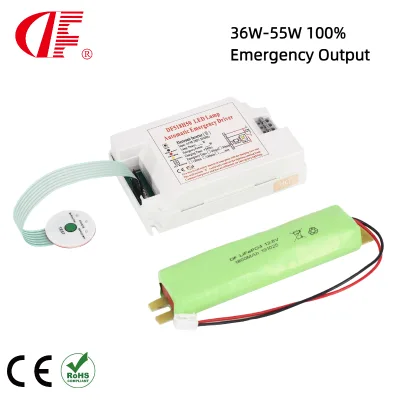
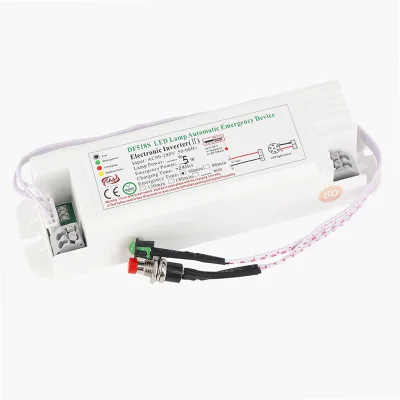
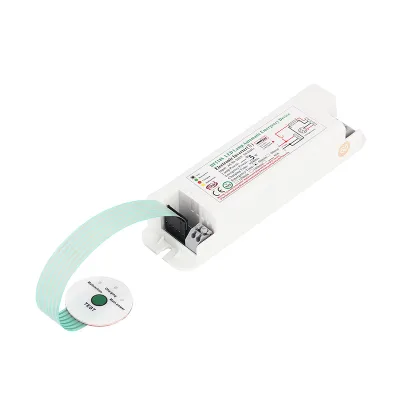
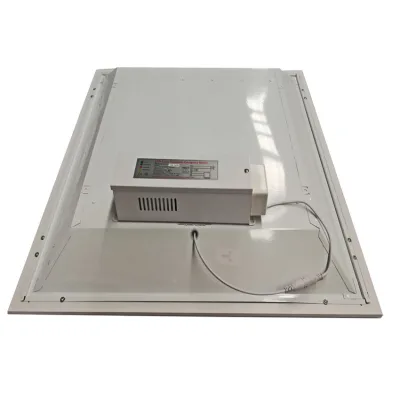
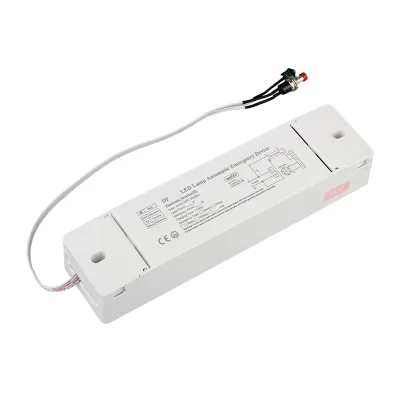
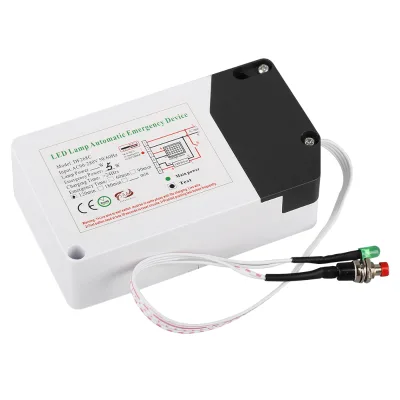


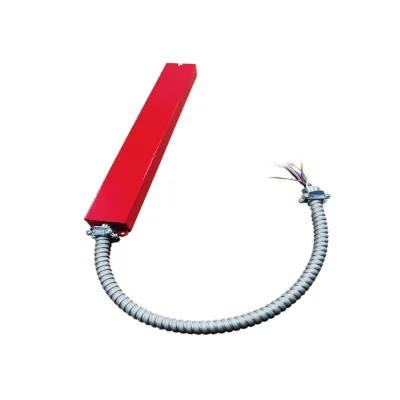


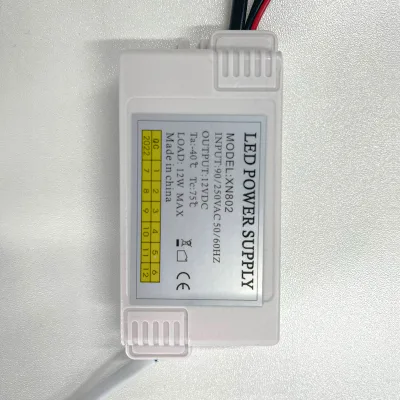

Comprehensive Sourcing Guide
Strategic Sourcing Guide for Self-Testing LED Emergency Drivers
Understanding Technical Architecture and Core Specifications
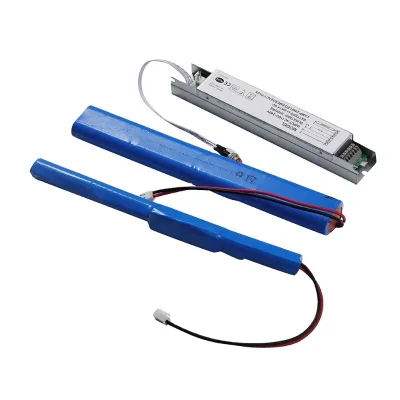
The procurement of self-testing LED emergency drivers requires a precise understanding of the underlying electrical architecture and the specific operational parameters that define their functionality. These devices are engineered to automatically switch from mains power to an internal battery supply during a power failure, ensuring continuous illumination for safety and egress routes. The core technical differentiator lies in the "self-testing" capability, which verifies the integrity of the battery and the driver circuit without manual intervention.
When evaluating product specifications, buyers must scrutinize the input voltage ranges, as these dictate compatibility with regional power grids. The observed market data indicates a diversity in input requirements, with some units supporting a broad AC90-280V range, while others are tuned for specific regions with AC120-277V inputs. This variation necessitates a careful review of the local grid frequency, typically 50Hz or 60Hz, to ensure seamless integration. The output voltage capabilities are equally critical; specifications range from DC18-200V to AC/DC90-280V, with some models offering non-isolated lamp compatibility for DC70-200V applications.
Power management is another pivotal area. The supported LED power ranges vary significantly across the product spectrum. Some drivers are optimized for low-power applications with a maximum support of 40W, whereas others are designed for high-intensity scenarios, supporting power ranges up to 300W. The emergency power output is similarly variable, with observed capacities spanning from 3-5W for minimal backup to 10W-30W for more robust emergency lighting. The battery technology selected also influences performance; the market features Lithium-ion (Lir) and LiFePO4 chemistries with voltages ranging from 3.2V to 12.8V, alongside NiCd options. Buyers should verify the specific battery capacity, such as the 3000mAh Lithium Polymer units observed, to ensure they meet the required runtime for their specific facility.
Compliance Verification and Certification Standards
In the realm of emergency lighting, regulatory compliance is not merely a formality but a fundamental safety requirement. The procurement process must rigorously validate that the selected drivers possess the necessary certifications for the target market. The observed product data highlights a consistent presence of RoHS (Restriction of Hazardous Substances) and CE (Conformité Européenne) markings, which are essential for European and many global markets. Additionally, CCC (China Compulsory Certification) appears frequently, indicating compliance with Chinese domestic standards, which is relevant for products manufactured in Guangdong or other Chinese production hubs.
For markets requiring stricter safety protocols, the presence of FCC (Federal Communications Commission) certification is noted in several product listings, particularly for units with self-checking functions that may emit radio frequency interference. The ISO certification is also a recurring attribute, suggesting adherence to international quality management systems. However, buyers must exercise caution; while UL924 is a widely recognized standard for emergency lighting, it appears in the background context rather than as a confirmed attribute for every listed product. Therefore, procurement teams should explicitly request UL924 test reports or equivalent local safety certifications rather than assuming their inclusion based on general industry knowledge.
The waterproof rating is another critical compliance metric, especially for outdoor or damp location installations. An IP65 rating was observed in specific product models, indicating protection against water jets from any direction. For indoor dry environments, this may be excessive, but for exterior applications, it is a minimum threshold. Buyers should verify the specific IP rating against the installation environment to avoid under-specifying the protection level. Furthermore, the "Self-Checking Function" is a mandatory feature for modern compliance in many jurisdictions, ensuring the driver periodically tests the battery and circuit. The presence of this function should be confirmed in the technical datasheet, as it is a key differentiator between basic emergency drivers and compliant self-testing units.
Cost Drivers and Economic Factors in Procurement
The pricing of self-testing LED emergency drivers is influenced by a complex interplay of technical specifications, certification costs, and production volumes. The observed price range in the market spans from $0.89 to $44.80, a wide disparity that reflects the diversity in power capacity, battery chemistry, and feature sets. Lower-cost units typically correspond to the 3-5W emergency power models with basic Lir batteries and standard packaging. In contrast, the higher price points are associated with high-power drivers supporting up to 300W, advanced LiFePO4 batteries, and comprehensive certification suites including FCC and ISO.
Minimum Order Quantity (MOQ) is a significant economic factor that impacts the total cost of ownership. The observed MOQ range is broad, extending from 1 unit to 500 units. For small-scale projects or prototype testing, suppliers offering low MOQs are essential, though the per-unit cost may be higher. Conversely, large-scale infrastructure projects can leverage bulk purchasing to reduce the unit price, provided the supplier can accommodate the volume. The customization options available, such as tailored emergency times or specific battery capacities, also introduce variable costs. Customization typically requires a higher MOQ and may extend lead times, impacting the overall budget and project timeline.
Packaging and logistics represent another layer of cost. The data shows variations from "Neutral Packing" to "Cartons" and specialized "Airport Seaport" packaging. While neutral packing may reduce initial costs, it might not meet the branding or protection requirements of certain distributors. Specialized packaging for air or sea freight ensures product integrity but adds to the shipping expense. Buyers should calculate the total landed cost, including shipping, duties, and packaging, rather than focusing solely on the unit price. Additionally, the warranty period, observed ranging from 2 to 4 years, serves as a long-term cost indicator. A longer warranty often correlates with higher initial quality and lower long-term maintenance costs, making it a valuable metric for total cost of ownership analysis.
Typical Applications and Installation Environments
The versatility of self-testing LED emergency drivers allows them to be deployed across a wide array of commercial, industrial, and public infrastructure applications. The primary application is in safety-critical environments where continuous illumination is mandatory during power outages. This includes office buildings, hospitals, schools, and shopping malls, where the self-checking function ensures that the emergency lighting system is always operational without the need for manual testing. The observed input voltage compatibility with both 50Hz and 60Hz grids makes these drivers suitable for international projects where power standards vary.
For outdoor or semi-outdoor installations, the waterproof rating becomes a decisive factor. The IP65-rated models observed are ideal for parking garages, loading docks, and exterior stairwells where exposure to moisture and dust is a concern. The robust construction, often utilizing PC+ABS materials, provides the necessary durability for these harsh environments. In contrast, indoor applications may prioritize the self-checking functionality and compact size. The observed dimensions, ranging from 953622mm to 24015075mm, indicate that smaller drivers are suitable for recessed ceiling fixtures, while larger units are designed for surface-mounted or high-power industrial luminaires.
The emergency time duration is another application-specific variable. Standard requirements often mandate 90 minutes of backup power, which aligns with the "90 minutes or Customized" specifications observed in the market. However, critical facilities such as data centers or large hospitals may require extended backup times, such as the 1-3 hour options available. The ability to customize the emergency time allows procurement teams to tailor the solution to the specific evacuation and backup power requirements of the facility. The support for various LED power ranges, from 40W to 300W, ensures that the drivers can be matched to the specific luminance requirements of different spaces, from small corridors to large atriums.
Supplier Evaluation and Quality Assurance Protocols
Selecting a reliable supplier for self-testing LED emergency drivers requires a rigorous evaluation process that goes beyond price comparison. The origin of the product, frequently identified as China or specifically Guangdong, provides insight into the manufacturing ecosystem. Buyers should verify the supplier's production capacity and quality control systems, looking for evidence of ISO certification and adherence to strict manufacturing standards. The presence of multiple certifications, such as FCC, RoHS, CE, and CCC, suggests a supplier capable of meeting diverse international regulatory requirements.
Quality assurance should focus on the consistency of the self-checking function. Buyers must request documentation or test reports that demonstrate the driver's ability to perform automatic battery and circuit tests. The "Self-Checking Function: Yes" attribute observed in the data is a positive indicator, but it must be validated through third-party testing. Additionally, the warranty terms, ranging from 2 to 4 years, serve as a proxy for the supplier's confidence in their product's longevity. A supplier offering a 4-year warranty is likely to have more robust quality control processes than one offering a 2-year warranty.
The packaging and logistics capabilities of the supplier are also critical. The observation of "Airport Seaport" packaging indicates a supplier experienced in handling international shipping logistics. Buyers should assess the supplier's ability to provide "Neutral Packing" or custom branding options, depending on their distribution strategy. Lead times and the ability to meet MOQ requirements are further factors in supplier evaluation. A supplier that can accommodate both low MOQs for testing and high volumes for mass production offers greater flexibility. Finally, the supplier's responsiveness to customization requests, such as specific battery capacities or emergency times, is a key indicator of their technical competence and customer service quality.
Long-Term Procurement Considerations and Lifecycle Management
Sourcing self-testing LED emergency drivers is not a one-time transaction but a long-term commitment that involves lifecycle management and future-proofing. The customization options available, such as specific battery chemistries and emergency times, allow buyers to adapt to changing regulations and facility needs. However, the availability of spare parts and the longevity of the battery technology must be considered. The shift towards LiFePO4 batteries, observed in several models, offers a longer cycle life compared to traditional NiCd or standard Lir batteries, making them a more sustainable choice for long-term deployments.
Maintenance and replacement strategies should be integrated into the procurement plan. The self-checking function reduces the need for manual testing, but periodic professional inspections are still necessary. Buyers should evaluate the supplier's support for maintenance, including the availability of replacement batteries and drivers. The warranty period is a crucial component of this strategy; a 4-year warranty provides a longer window of protection against defects, reducing the risk of unexpected replacement costs. Additionally, the standardization of components across different product models can simplify inventory management and reduce the complexity of maintenance operations.
Regulatory changes and evolving safety standards are another long-term consideration. As building codes become more stringent, the demand for advanced self-testing features and higher certification levels may increase. Procurement teams should prioritize suppliers who are proactive in updating their product lines to meet new standards. The flexibility to customize emergency times and power outputs ensures that the installed systems remain compliant even as regulations evolve. Finally, the environmental impact of the product, particularly the battery disposal and recycling, should be factored into the decision-making process. Selecting suppliers with strong environmental policies and RoHS compliance helps mitigate the ecological footprint of the emergency lighting infrastructure.
FAQs
What certifications do self testing led emergency drivers typically have?
Most units carry RoHS, CE, and ISO certifications, with some models also including FCC and CCC marks. These certifications ensure compliance with international safety and environmental standards for various regional markets.
How long is the emergency backup time for these drivers?
Standard emergency times range from 90 minutes to 3 hours, with options for customization based on specific project needs. Some models support extended durations up to 3 hours to meet critical facility requirements.
Which battery types are used in self testing led emergency drivers?
Drivers utilize various battery chemistries including Lir, LiFePO4, Li-ion, and NiCd with voltages ranging from 3.2V to 12.8V. Specific capacities like 3000mAh Lithium Polymer are also available for higher performance applications.
Can these drivers support high power LED loads up to 300W?
Yes, certain models support LED power ranges up to 300W, while others are limited to 40W or 100W maximums. Buyers must select a driver matching their specific luminaire power requirements for optimal operation.
What input voltage ranges are compatible with these emergency drivers?
Input voltages vary between AC90-280V and AC120-277V to accommodate different regional power grids. This flexibility ensures compatibility with both 50Hz and 60Hz frequencies found in global markets.
How does the self-checking function improve driver reliability?
The self-checking function automatically verifies battery integrity and circuit status without manual intervention. This feature ensures the emergency lighting system remains operational and compliant with safety regulations during power failures.
What is the typical warranty period for these products?
Warranty periods generally range from 2 to 4 years depending on the manufacturer and model specifications. Longer warranties often indicate higher quality components and more robust manufacturing processes.